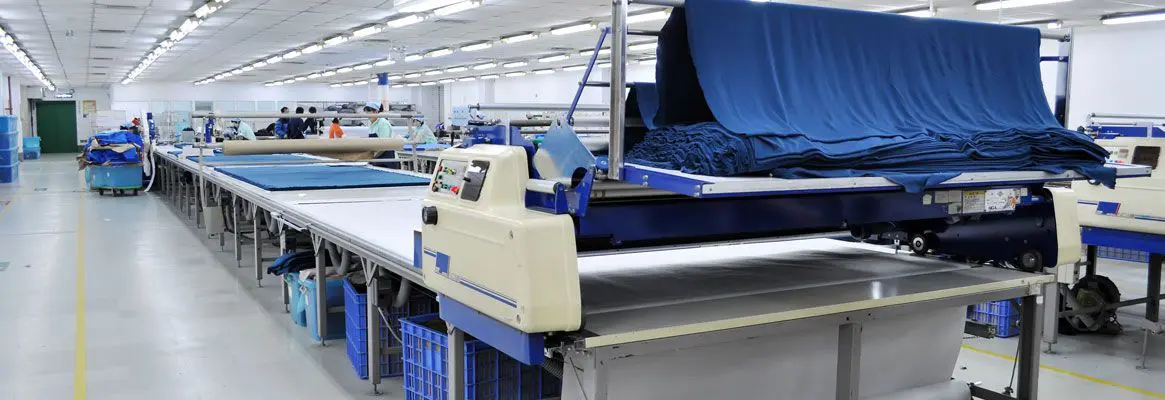
Current situation is that the textile industry is facing a paradigm shift which is a keystone in manufacturing globally. The industry of textile and fashion for several centuries was a clear example of labor-intensive goods in which masters selectively created tissues and clothing. But the times are changing now thanks to the automation of processes that is now on the rise and in near future would change the face of the textile industry entirely.
The key enabler of this transformation is the application of enabling technologies like Robotics, Artificial Intelligence and Machine Learning. They are also introducing solutions that are automating different aspects of the process of textiles creation that includes spinning, weaving , dyeing and finishing among others. Therefore production processes are becoming streamlined, flexible and more cost effective.
Other withholds of this automation in textile consist of; Lean manufacturing promises the possibility of an increased quality of products, less scrap, and a reduced negative influence on the environment. Automating the textile industry will reduce wastage, and human errors hence playing its role to ensure sustainability.
In the same way, textile automation is keeping the innovative interest and creativity high. It creates opportunities to create fresh fabric, new patterns, and visually stunning designs which could not have been imagined before. This gives the fashion industry a new dimension to its creativity while making a garment distinctive from all others, and unique to the person.
Table of Contents
The Need for Automation
The timeless conventional textile industry has been experiencing challenges that include scarcity of workforce, fluctuating quality and high costs of production. The above issues are some of the problems that automation solves, in its ability to produce more items, do so at a better quality and besides all the above, it does not require human workers.
- Labor Shortages: In case of increasing labour costs and shortages of skilled workforce, achieving reliable results, fast and accurately is possible with the help of automation.
- Quality Control: Automating reduces the impact of human interference in the quality of produced products as well as increasing the accuracy of regulating production processes.
- Increased Efficiency: Automation leads for instance to round the clock operations, meaning increased production rates, lowered lead times.
- Reduced Costs: Manufacturers can cut down on production costs a great deal due to the automation of some labor-intensive procedures.
Key Areas of Automation
- Fiber Preparation: Some of the routine processes that are automated in preparation of fibers include; carding, combing and drawing. Via the use of automatic type of machines it would be easier to process the fibers and also have quality and consistent outcomes.
- Spinning: Spinning refers to the process of drawing fiber into yarn to make recycled sewing thread. Yarn production that is carried out by these spinning machines can be much more rapid as compared to conventional procedures, but with quality being offered more focus.
- Weaving and Knitting: Knitting and weaving are important factors of the fabric and textile industries. Computer controlled weaving or embroidery with textured thread and knitting machines are capable of weaving any type of simple or compounding fabric.
- Dyeing and Finishing: Many processes involved in dyeing and finishing are dangerous to health and are eco-unfriendly. They can cut the possibility of danger and pollution and enhance productivity and quality at the same time.
- Cutting and Sewing: Computerized cutting and sewing equipment that help in cutting and sewing clothes enable good results of impressing intricate patterns on fabric and sewing the garments with speed to eliminate the expensive human labor.
Effect On The Growth Of The Textile Industry
The adoption of automation in the textile industry has far-reaching implications:
- Job Displacement: Though it is true that automation results in unemployment, on the other hand the automation industry creates other sectors such as maintenance of the machines, their programmers and controllers and quality control departments.
- Increased Competitiveness: Textile manufacturing with the help of an automated system assures the development of quality products at reasonable prices, thus can contribute to competing in the world market.
- Sustainable Manufacturing: Automation plays an important role in loss control in textile production, since resources, including water, electricity, chemicals, and fiber are conserved through the process.
- Innovation and New Products: The big picture is that automation makes it possible to create new textile products such as smart fabrication and tailored garments.
The Future of Textile Automation
Thus, the potential for creating a sustainable textile automation technology remains extremely high in the future. Thus, in the view of the continually progressing development of technologies, more complex and more efficient automation solutions will likely appear on the horizon in the upcoming years.
The use of artificial intelligence and machine learning is one of the most appealing prospects of development within the textile industry. There is the ability to schedule production, status of equipment, or even quality for the product or service. Further, consumers can benefit from a personalized product fabrication, in other words, they can create their own clothes and accessories, thanks to the use of AI.
Another emerging trend perceived in the textile industry is embracing robotic systems in production of textiles. Industrial robots are used for problems that involve a lot of repetition, danger or precision including cutting, sewing, and dyeing operations. Such management not only increases productivity but also increases the levels or rate of accidents experienced by workers.
Therefore, as the textile industry ventures closer to becoming sustainable automation will provide the solution for its necessity. A wide range of benefits like minimizing wastage hence the efficient use of resources can make the supply chain more environmentally friendly when automation is embraced. In addition, automation can help create novel materials and solutions that will be efficient and ecological all at once.
Thus, it is more than promising to speak about the further development of textile automation. Such advice is in the interest of boosting the industry by adopting modern technologies and adopting new ways of work. In similar fashion, automation is set to feature the future of textile , and therefore, hold a-positive outlook for the future.
Conclusion
To sum up thus, textile automation, through its effects on the sector, is in the process of changing the textile industry through positive injection of efficiency, productivity and sustainability. This allows the manufacturers to cut the labor costs, enhance the quality of the fabric as well as increase the production capacity of spinning and weaving and of dyeing and finishing.
In addition, automation technologies are being used to improve the flexibility of textile industries to suit changing customer trends and needs in the market. With this kind of advanced machinery, there is an ability for manufacturers to produce high quality as well as special products for consumers. Furthermore, automation decreases wastes and energy use improving the eco-friendly nature of the textile businesses.
With the growth of textile automation systems this field has been emerging and it is very important for the industries and especially the professionals to accept and go for these automation systems and get equipped with these systems in order to adapt to new changes that are being characterized by these automation systems. Through acquiring training and education human resources can meet the changing demand in the industry hence help in the growth and development of the industry. We concluded that the textile industry should adopt automation because it will lead to the creation of a more sustainable future that allows the industry to design and produce timely new, high quality, and efficient textile products.